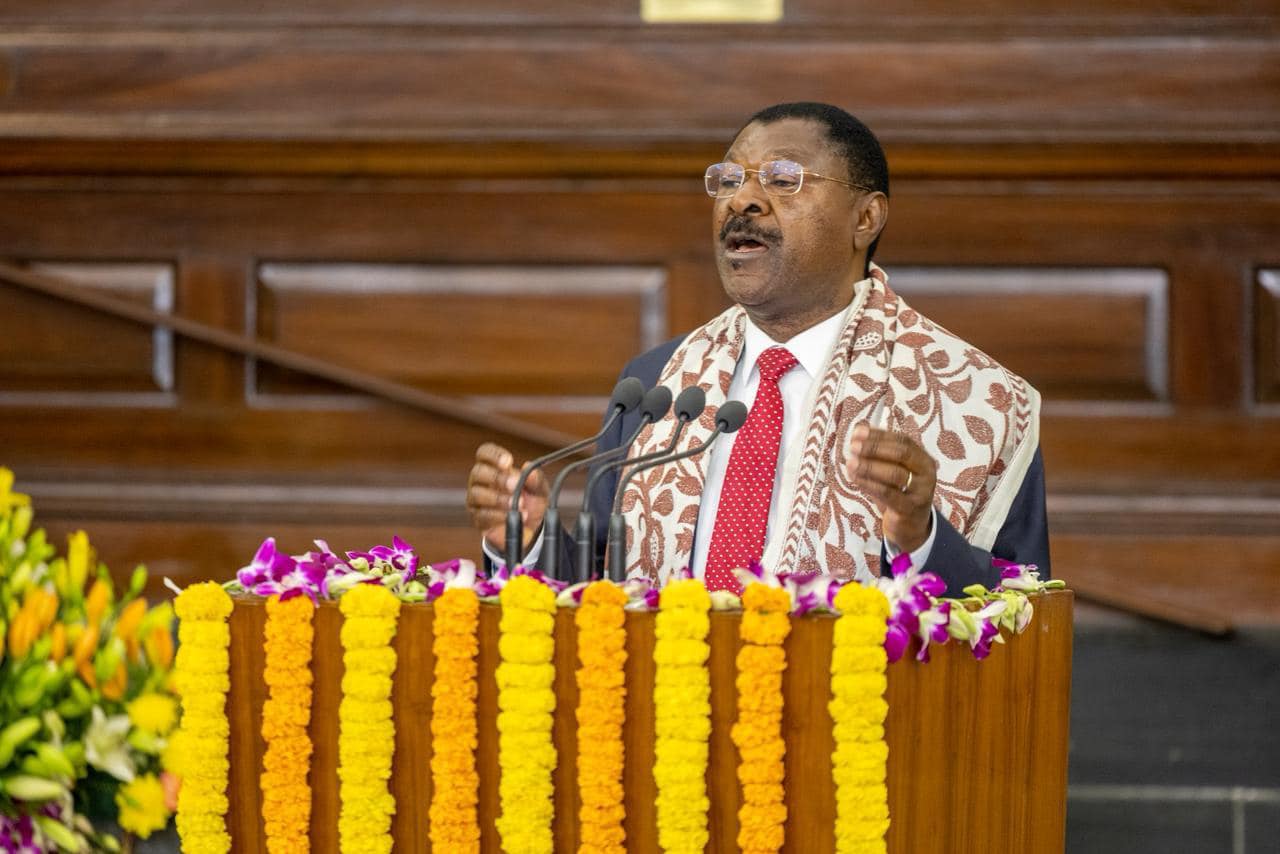
National Assembly Speaker Moses Wetang’ula has cautioned lawmakers about the growing influence of social media, describing it as both useful and risky for parliamentary work. He said while digital platforms allow leaders to connect directly with citizens and promote openness, they also spread false information, fuel hostility, and deepen political divisions.
The Speaker made the remarks during the official opening of the Conference of Speakers and Presiding Officers of the Commonwealth, currently taking place in New Delhi, India. The forum, which was officially opened by India’s Prime Minister, Shri Narendra Modi, is focused on strengthening cooperation among Commonwealth Parliaments.
Addressing delegates, Speaker Wetang’ula noted that parliamentary work is now exposed to constant public attention, unlike in the past when proceedings were largely shielded from instant reaction. He said lawmakers now operate under immediate and often unfiltered scrutiny driven by digital platforms.
“For parliamentarians, this is not merely a communications challenge. It affects personal safety, legislative focus, and the capacity of Parliament to deliberate without intimidation,” he noted.
He warned that social media should not be used as a weapon to threaten or harass Members of Parliament, saying such actions weaken their ability to carry out their constitutional duties. According to him, unchecked digital attacks distract lawmakers and interfere with meaningful debate.
“Once misinformation takes hold in a highly charged digital environment, correction becomes harder than silence, and explanation can be mistaken for manipulation,” Wetang’ula said.
He further explained the mixed nature of online platforms, noting both their value and danger to political leadership.
“Social media is a double-edged sword for parliamentarians. On one hand, it's a powerful tool for direct engagement, transparency, and accountability. On the other hand, it amplifies misunderstandings, misinterpretations, and polarization.”
The Speaker urged legislators to exercise wisdom when dealing with online criticism, saying not all comments deserve attention.
“Should Members develop a strong backbone? Yes, in the sense that legitimate scrutiny is part of public life. But strength also lies in knowing which criticism deserves engagement, and which noise should be ignored. Not every provocation requires a response. Not every trend requires participation,” he said.
He added that leaders must be mindful of how Parliament is portrayed online, stressing that digital conduct should reflect seriousness, discipline, and purpose.
On the sidelines of the conference, Speaker Wetang’ula held talks with Prime Minister Modi, where he acknowledged India’s democratic progress and its role in national development.
“I acknowledged India’s strength of democracy and its contribution to the nation’s growth,” he said.
The Prime Minister reaffirmed India’s support for the Commonwealth’s Sustainable Development Goals, which focus on areas such as health, climate change, economic growth, and innovation aimed at long-term progress.
Speaker Wetang’ula’s remarks highlighted the growing responsibility facing lawmakers in the digital age, as they balance public engagement with the need to protect personal safety and preserve the dignity and independence of Parliament.